
Mining Power Supply for High-Altitude Sites
Mining power supply and high altitude power supply for 3500–4500 m: air pressure 61 % of sea level, −30 °C winter start, diesel and grid on one bus; surface plant, processing and substations in non-hazardous areas only — we do not supply explosion-protected or underground equipment
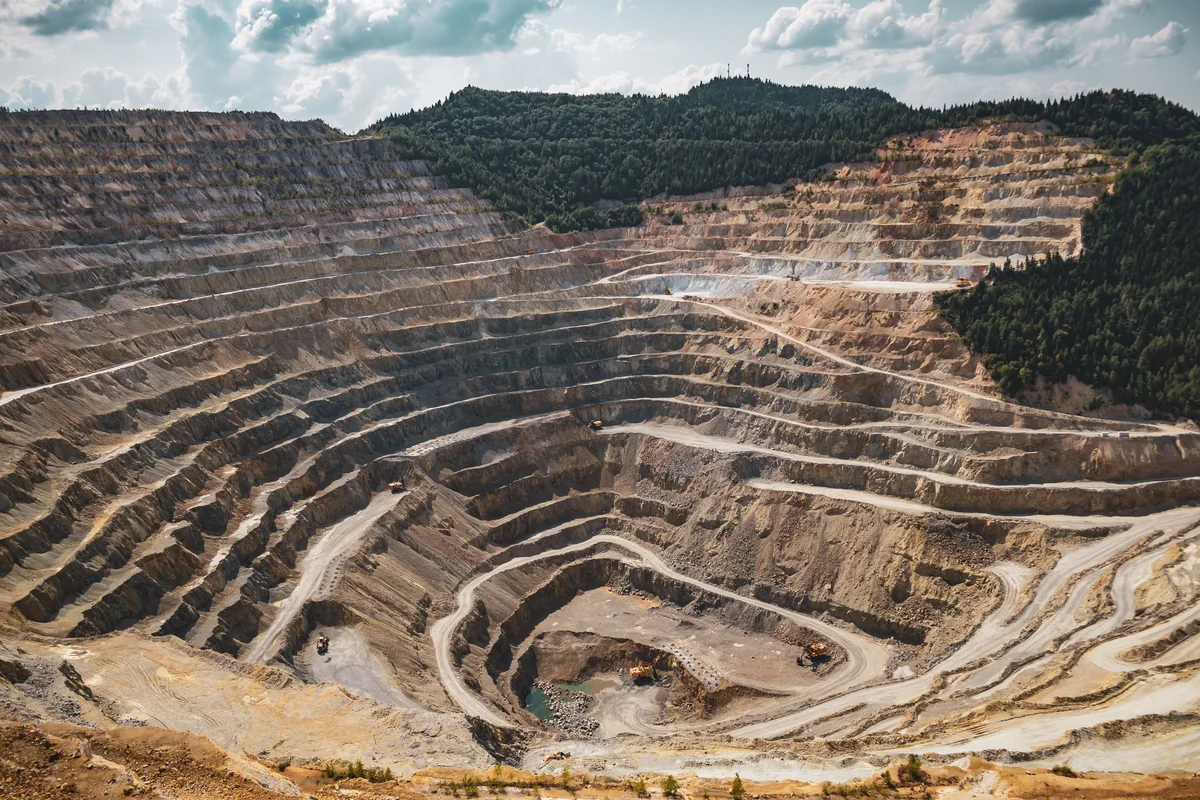
Altitude is an electrical problem, not a comfort problem. At 4000 m the air carries away 40 % less heat than at sea level and breaks down at a lower voltage, so a mining power supply has to be specified against air density before anything else.
What thin air does to a mining power supply
Two effects, both proportional to altitude. Air pressure at 4000 m is about 61 % of sea level, so convection cooling loses roughly the same fraction: a unit rated 100 kW at 1500 m delivers about 70 kW at 4000 m unless the cooling is designed for it. The second effect is dielectric strength — air gaps that are safe at sea level can arc at altitude, which is why clearance and creepage are re-checked rather than inherited from a temperate datasheet.
The third effect is the one that surprises people: a diesel genset loses roughly 3 % of rated power per 300 m above 1000 m. A 500 kVA genset at 4000 m delivers about 350 kVA, and the whole site has to be balanced against that number.
Derating figures at 4000 m
| Altitude | Relative air pressure | Power available | Cooling needed |
|---|---|---|---|
| 1000 m | ≈ 89 % | 100 % | Natural convection |
| 2000 m | ≈ 78 % | ≈ 95 % | Natural convection, derated |
| 3000 m | ≈ 69 % | ≈ 85 % | Forced air or oversized heatsink |
| 4000 m | ≈ 61 % | ≈ 72 % | Forced air, one frame size up |
| 5000 m | ≈ 53 % | ≈ 65 % | Forced air, sealed and filtered |
The working figure is roughly 1.4 % of rated power lost per 100 m above 2000 m for convection-cooled equipment. We quote against the derated number, never the nameplate.
Cold start at −30 °C
A high altitude site in winter combines thin air with −30 °C mornings. Batteries deliver about 40–55 % of rated capacity at that temperature, and a sealed lead acid battery that has been sitting cold overnight is the usual reason a site does not restart.
The answer is not a bigger battery. It is a heated or indoor-mounted battery compartment for the ups battery backup, a charger with a low-temperature charge profile, and a heated enclosure for anything with an LCD. All three are cheaper than doubling the battery.
Specifications for a 4000 m site
| Parameter | Value |
|---|---|
| Altitude | Up to 5000 m, cooling and clearances derated for the site elevation |
| Ambient | −30 to +40 °C, with solar gain on the cabinet |
| Humidity | 5–95 % non-condensing, wide diurnal swing |
| Cooling | Forced air sized at site air density, not sea level |
| Battery | VRLA in a heated compartment, or indoor cabinet |
| Enclosure | IP54, stainless or galvanised, sunshade on south faces |
| Genset interface | Soft loading, 3 % per 300 m altitude derate applied to the genset rating |
| Earthing | Site-specific, rocky ground needs a buried grid |
What we would fit at 4000 m
| Section | Configuration | Notes |
|---|---|---|
| Main incomer | Grid or genset, changeover with soft loading | |
| Distribution | MCC with altitude-derated breakers | |
| Control power | 24 V DC bus with redundancy on two chargers | |
| Backup | ups battery backup with heated battery drawer | |
| Auxiliary | dc system for lighting, pumps and comms |
Site conditions to send us
- Elevation in metres, not "high altitude"
- Minimum and maximum ambient, and whether the sun hits the cabinet
- Total load in kW, split into continuous and intermittent
- Autonomy in hours for the control and backup sections
- Whether a genset is present, and its altitude-derated rating
Commissioning sequence on site
Commission a high-altitude site in a fixed order. Verify the earthing grid first, because rocky ground makes it the item most likely to be wrong. Then run the genset on load and measure the actual bus voltage and frequency under a load step — that measurement, not the nameplate, decides the charger input range. Only then energise the control bus and confirm the battery compartment heater holds temperature at the winter minimum.
Send us the numbers
Send the site altitude, the load list and the winter minimum. You get a derated configuration and a cold-start procedure.
Standards referenced on this page
- IEC 60664-1 — Insulation coordination — clearances and creepage, the standard that governs altitude derating
- IEC 60068-2-1 — Cold-start environmental testing
Frequently asked questions
QWhy does power equipment lose capacity at altitude?
The air gets thinner and carries less heat away. A convection-cooled enclosure at 4000 m removes noticeably less heat than the same enclosure at sea level for the same temperature rise, and forced-air cooling loses throughput roughly in proportion to the drop in air density. Nothing about the electronics changes — the cooling path does, and the rating follows the cooling path.
QHow much derating should I plan for at 4000 m?
Plan on 20 to 30 percent for convection-cooled equipment, with the exact figure taken from the manufacturer's altitude derating curve rather than from a rule of thumb. Derating is published either as a reduction in output power or as a reduction in maximum ambient, depending on the maker. The important part is that it is applied before the batteries are sized, not discovered afterwards.
QDo I need a heater for a cold start at −30 °C?
For the batteries, almost always. The electronics will generally start. A valve-regulated lead-acid string at −30 °C holds a fraction of its room-temperature capacity and charges poorly, and forcing charge into a frozen string damages it. The usual solution is an insulated, thermostatically heated battery enclosure with the charger interlocked so that it will not charge below the battery's cutoff.
QWhat ingress protection do I need against coal dust?
IP5X at the enclosure is the practical target where dust is conductive and settles on boards, and IP6X where washdown or heavy airborne dust is expected. Note that the rating belongs to the enclosure, not to the modules inside it — a power supply mounted in an IP54 cabinet does not need to be IP54 itself, and specifying it internally adds cost for no benefit.
QCan you supply explosion-proof equipment for underground coal?
No. Explosion-protected equipment for a gassy mine requires its own certification regime, a certified enclosure and a certified installation, and we do not supply it. We supply power equipment for surface plant, processing facilities, substations and the non-hazardous parts of a site. If your scope includes a hazardous zone, that part of the package needs a different supplier.