
Telecom Power Supply for Remote and Off-Grid Sites
Telecom power supply and off grid power supply: DC UPS on a 48 V bus with diesel, PV and battery, −40 °C winter start, 6-month service intervals
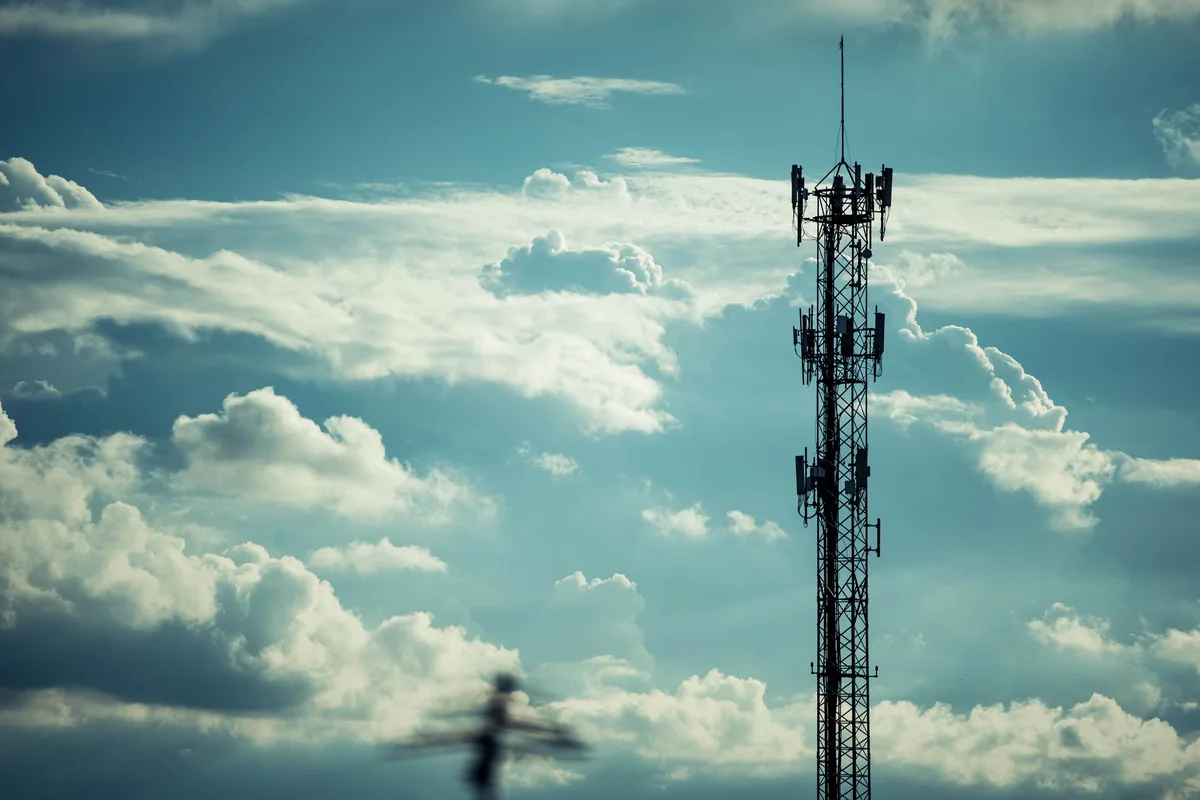
On a remote site the bus is the problem, not the load. Diesel, PV and battery all feed the same 48 V rail, and a DC UPS has to hold the load through the moments when none of them is steady.
The bus is dirty and nobody is coming
A 48 V DC power supply bus on an off-grid site is fed by whatever is running. A diesel genset on light load hunts, so the bus voltage swings ±8 % and the frequency wanders. A PV array disappears under cloud in seconds. A battery string that has been at −30 °C overnight delivers 40–55 % of its rated capacity.
A telecom power supply for this duty needs a wide input window on the charger, PV maximum-power-point tracking that tolerates the swing, and a DC UPS section that holds the load through the transition. The failure mode is almost never the converter — it is the battery, cold and undersized.
Specifications
| Parameter | Value |
|---|---|
| Bus voltage | 48 V DC nominal, 40–58 V operating window |
| Charger | Diesel and grid input, 90–280 V AC, 45–65 Hz |
| PV input | MPPT, 100–450 V DC array, 80–600 V option |
| Battery | VRLA or LiFePO4, heated compartment below −20 °C |
| Autonomy | 3 to 10 days, sized on the actual load, not the equipment rating |
| Operating temperature | −40 to +55 °C |
| Enclosure | IP54 outdoor cabinet, or indoor rack version |
| Monitoring | Remote alarms by SMS or SNMP, generator start signal, door and battery status |
| Service interval | 6 months, filter and battery check only |
Sizing the three sources on a telecom DC power supply bus
| Source | Sizing rule | Notes |
|---|---|---|
| Diesel | Sized to the load plus recharge, run at > 60 % load | |
| PV | Sized to cut diesel hours, not to carry the site alone | |
| Battery | Sized for autonomy between services, not between refuels | |
| DC UPS | Holds the load through genset start and PV dips |
Winter start at −40 °C
An off grid power supply at −40 °C has three cold problems: the battery, the charger electrolytics, and any display. The battery is solved by a heated compartment with a thermostat, not by oversizing. The charger needs a low-temperature rating. The display needs a heater or an outdoor-rated unit with no LCD.
A DC UPS on the same bus sees the same cold, so the same three rules apply to it.
What a six-month visit interval changes
- Battery: VRLA is the default because nobody is on site to top up cells, and the datasheet design life is quoted at 25 °C — a hot cabinet shortens it.
- Filters: a washable pre-filter rather than paper, changed on the annual visit instead of when a warning light says so.
- Alarms: every fault route goes to a dry contact and a remote channel, because nobody will read a local display for six months.
- Spares: one charger module and one converter held on site, since a courier to the site takes days.
Site conditions to send us
- Load in watts, continuous and peak, from the equipment list
- Autonomy in days between service visits
- Minimum winter temperature and whether the cabinet is heated
- Diesel genset rating and whether it is existing or new
- PV array size and orientation, if present
Commissioning a site nobody visits often
On a six-month service interval the commissioning has to be verifiable remotely. Confirm every alarm path end to end before you leave — a door alarm that only works locally is not an alarm. Log the measured battery capacity at 25 °C and the heated-compartment thermostat setting, so that a later capacity complaint can be separated from a temperature problem without a site visit.
Send us the numbers
Send the load in watts, the autonomy in days and the site visit interval. You get a source-sizing calculation and a spares list.
Standards referenced on this page
- IEC 62368-1 — Safety requirements for power supply equipment
- ETSI EN 300 132-3 — Environmental engineering — power supply interfaces at telecom sites
Frequently asked questions
QHow do I size an off grid power supply for a site with no grid?
From the load's daily energy in watt-hours, not from the peak power. Take the 24-hour energy draw, add the system losses, then size the array against the worst month's sun hours at that latitude and the battery against the number of autonomy days you can accept. Autonomy days are the most expensive line in the off grid power supply, so agree them with whoever pays for the site visits.
QWhy does the battery fail first at −40 °C?
Because the chemistry slows down. A lead-acid battery at −40 °C delivers a small fraction of its rated capacity, and a DC UPS sized on the nameplate figure will not hold the load, and a lithium iron phosphate pack will not accept charge below roughly 0 °C without a heater and a charge cutoff. The load may only need a two-hour ride-through, but the pack has to be sized for its cold capacity, not for the figure on the label.
QDo I need a generator as well as solar?
For most sites, yes, unless the load is small and the autonomy is generous. Solar alone means sizing the array and the battery for the worst week, which is expensive. A generator running a few hours a week is usually cheaper than the extra array and battery capacity that would remove it, and it also gives you a maintenance window. On a telecom power supply the rectifier bank normally hangs off the same dc bus as the generator set.
QWhat should the enclosure be rated?
IP54 or better for an outdoor cabinet in dust, wind-driven rain and snow, with a sun shield and either a filtered forced-air path or a heat exchanger. Once you are above IP55 the site conditions drive the thermal design more than the ingress rating, because the internal temperature is what kills the equipment. A sealed cabinet in summer is an oven.
QHow long should the autonomy be on a DC UPS?
It depends on how long it takes somebody to reach the site. Two to four hours is typical where there is a generator and a local operator. Eight hours and up is normal where the site is a long drive away or the road is seasonal. The honest way to set it is to work backwards from the response time, including the response time in bad weather, and against the site conditions rather than the annual average.