
High Temperature Power Supply for Desert Substations
High temperature power supply for desert sites: a substation DC system at +55 °C ambient, 70 °C inside the cabinet, wind-borne sand, IP54 filtered enclosure and DC distribution board options
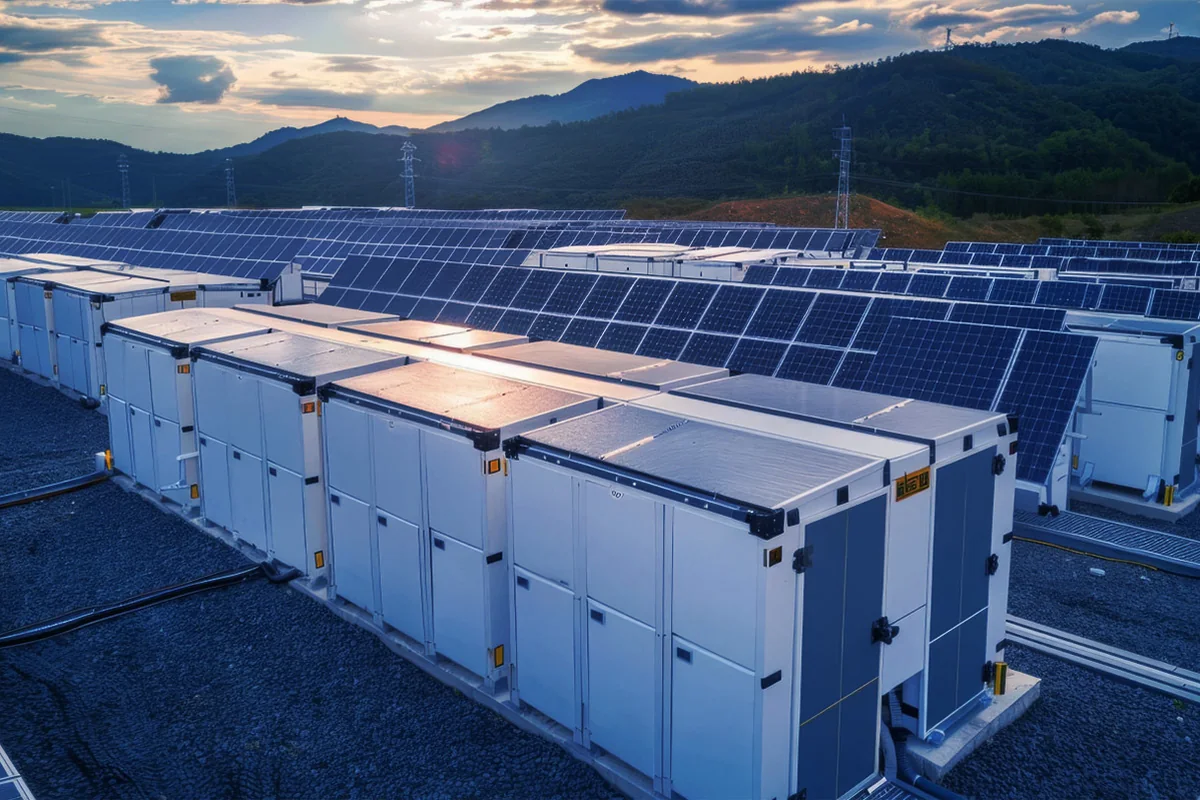
This is a cooling problem wearing an electrical costume. The high ambient figure is only half of it: a cabinet in direct sun with no air movement runs 15–20 °C above the ambient, and that is the number the dc system has to live with. The 220 V DC power supply section below is sized on that same cabinet figure.
High temperature power supply: +55 °C outside, 70 °C inside
The design figure is the cabinet interior, not the weather station. A steel cabinet in the sun at 55 °C ambient reaches 65–72 °C inside, and every component inside is rated against that. Batteries are the first to go: a VRLA battery loses half its life for every 10 °C above 25 °C, so a 10-year battery at 55 °C is a one-year battery in practice.
Two fixes, both physical rather than electrical: a sunshade or double-skinned roof that cuts solar gain, and a filtered forced-air path that keeps the interior within 10 °C of ambient. A system without those two will be replaced.
The temperature ladder, inside and out
| Where | Worst case | What it does to the equipment |
|---|---|---|
| Outside air | +55 °C | Sets the cabinet internal temperature, plus solar gain on the roof |
| Cabinet, top third | +70 °C | Electronics derate; electrolytic capacitors age fastest here |
| Battery compartment | +45 °C limit | Design life roughly halves for every 10 °C above 25 °C |
| Charger heatsink | +85 °C | Needs the sunshade and the filter kit to hold the rating |
Wind-borne sand and the ip rating question
Sand drives the enclosure decision. A high ip rating keeps sand out but traps heat in; a low one with filtered forced air keeps the temperature down but needs a filter service interval. The workable answer is IP54 with a washable pre-filter and an air path sized for a partially blocked filter, not a sealed IP65 box with no ventilation.
Airflow that depends on a filter nobody cleans fails quietly. We size the airflow against a 50 % blocked filter so the cabinet stays within limits between services.
Specifications for a +55 °C site
| Parameter | Value |
|---|---|
| Ambient | +55 °C design, +60 °C short-duration |
| Cabinet interior | ≤ 65 °C with sunshade and forced air |
| Air path | Forced air, sized for 50 % filter blockage |
| Enclosure | IP54, galvanised or 304 stainless, sunshade roof |
| Battery | High-temperature VRLA or indoor-mounted string |
| Battery derating | High ambient above +45 °C applied to the capacity calculation |
| Bus interface | DC bus for protection, tripping and SCADA |
| Standards | DL/T 459, GB/T 19826, IEC 60529 for the enclosure |
Recommended dc system configuration
| Section | Configuration | Notes |
|---|---|---|
| Charger | Temperature-compensated, sized for +55 °C ambient | |
| Battery | High-ambient VRLA, indoor or shaded compartment | |
| Distribution | dc panel with graded feeders and 20 % spare ways | |
| Air path | Sunshade plus filtered forced air, filter alarm | |
| Monitoring | Cabinet temperature, filter status, DC bus health |
Filter service and the seasonal check
A filtered cabinet is a maintained cabinet. Set the filter check interval from the local dust load rather than from a generic number — in open desert that is often monthly at first, then quarterly once the pattern is known. Log the cabinet interior temperature at each visit; a rising trend means the filter is blocking or a fan is slowing, and both are cheap to fix before the battery feels it.
What to send before quoting
- Design ambient and whether the cabinet is in direct sun
- Cabinet dimensions and how much equipment is inside
- Autonomy in hours at the stated load
- Whether a service visit is possible, and how often
- Sand and dust exposure: open desert, semi-arid or coastal
- Whether the cabinet has a sunshade already fitted
Send us the numbers
Send the design ambient, the dust conditions and the visit interval. You get a cabinet specification with the filter and sunshade quoted as part numbers.
Standards referenced on this page
- IEC 60529 — Degrees of protection provided by enclosures (IP code)
- IEC 60068-2-2 — Dry heat environmental testing
Frequently asked questions
QWhat actually fails at 55 °C ambient?
Electrolytic capacitors first, then anything whose rating was quoted at 25 °C. Capacitor life roughly halves for every 10 °C rise in operating temperature, so a unit rated for its nominal life at room temperature becomes a consumable item at 55 °C. The second failure is thermal shutdown on a unit that was sized to its nameplate instead of to its derating curve.
QDo I need air conditioning in the cabinet?
Usually not, if the enclosure and the layout are designed for it. Air conditioning adds a component that itself fails at 55 °C, plus a load that has to be backed up. The order of preference is: reduce the internal heat, improve the shading and the thermal path, use a heat exchanger where the ambient sits below the internal target, and only then consider active cooling.
QWhat IP rating do I need against sand?
IP5X for dust-protected and IP6X for dust-tight, with the caveat that the rating describes ingress, not heat. A sealed enclosure in a desert has a thermal problem that a louvred one does not. The usual resolution is either a sealed inner cabinet with a heat exchanger, or a shaded, filtered, forced-air outer enclosure — choose the one your team can actually maintain.
QHow do I size for a site with no grid connection?
From the load profile and the fuel logistics, not from the peak. Size the generator to the running load plus the charging load, with margin for starting surges; size the UPS or the DC system to ride through the transfer; and check the generator's own derating for the site altitude and ambient. Confirm the fuel delivery interval before you confirm the battery autonomy.
QDoes high ambient shorten battery life as much as it does electronics?
More. A valve-regulated battery at 35 °C has a substantially shorter service life than the same battery at 25 °C, and in a desert installation it is the temperature inside the cabinet that matters rather than the temperature in the shade. Where the budget allows it, a separate shaded and ventilated battery enclosure pays for itself across two replacement cycles.